Table of Contents
How to Grow Herbs in Pots on a Small Patio
Last updated: July 2026
This guide covers growing herbs as plants. It is not medical advice or a guide to treating health conditions. If you plan to consume an herb for a health purpose, especially while taking medication or during pregnancy, speak with a qualified health professional first.
A small patio can hold a useful herb garden, but the first shopping trip is where many beginners make things harder than they need to be. They buy a decorative pot with no drainage, combine herbs that need different watering schedules, or start with more plants than they can monitor.
Learning how to grow herbs in pots is mostly about matching four things: the plant, the container, the light, and the watering routine. You do not need a large raised bed or a complicated irrigation system. Four well-chosen pots in the right place are enough to learn what works in your space.
Key Takeaways
- Start with three or four herbs rather than a full collection. Basil, thyme, parsley, and mint give you a useful mix of growing habits to learn from.
- Every pot needs an open drainage hole and a lightweight potting mix. Garden soil is usually too dense for a container.
- Group herbs by water needs, not by how good they look together. Basil and parsley prefer steadier moisture, while thyme and rosemary should dry more between waterings.
- Check the soil with your finger instead of watering on a fixed calendar. Small outdoor pots can dry quickly during hot, sunny weather.
- Keep mint in its own pot because its spreading stems and roots can crowd neighboring plants.
What Is a Container Herb Garden?
A container herb garden is a group of herbs grown in pots, window boxes, grow bags, or other containers instead of directly in the ground. It works well on a patio because the pots can be moved as the sun, wind, and season change.
The goal is not to fit as many plants as possible into one container. It is to give each herb enough root space and place plants with similar light and moisture needs together.
For a simple first setup, plan on:
- Three or four containers with drainage holes
- Commercial potting mix
- Three or four herb plants or seed packets
- A watering can with a narrow spout
- Plant labels
- A patio location you have observed for at least one sunny day
That small list is enough. Shelves, self-watering planters, grow lights, and specialty fertilizers can wait until you know what your patio needs.
Which Herbs Grow Well in Pots for Beginners?
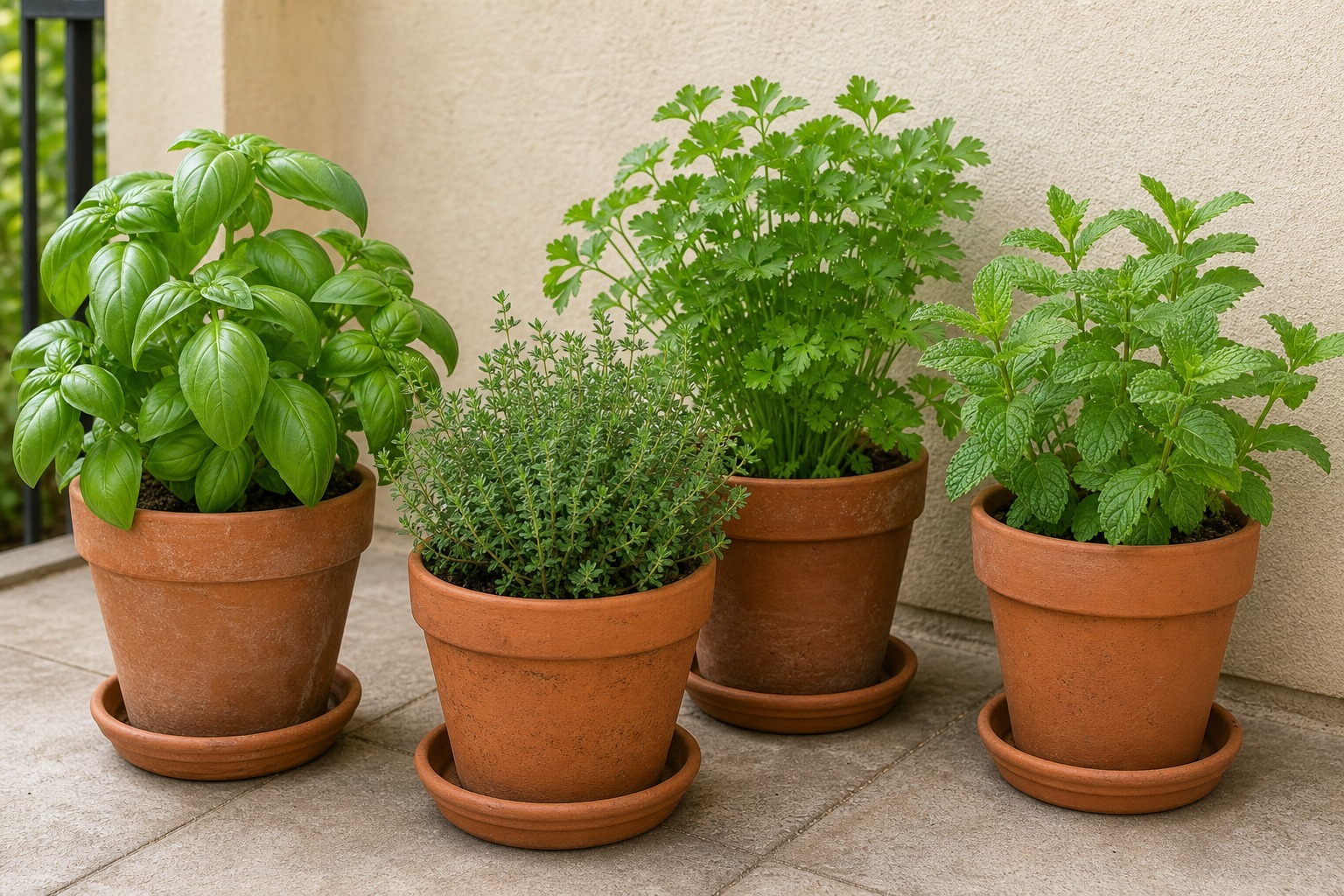
Basil, thyme, parsley, and mint are a practical four-herb starting group, but they should not all share one pot. They expose you to two different watering patterns without requiring a large collection.
The University of Maryland Extension lists basil, rosemary, thyme, sage, lavender, parsley, mint, chives, oregano, tarragon, and cilantro among the herbs that grow well in containers. It also recommends grouping herbs by similar growing needs.
| Herb | Starting container | Moisture pattern | Useful beginner note |
|---|---|---|---|
| Basil | 2- to 5-gallon pot | Keep evenly moist, not waterlogged | Pinch flower buds to keep leaf growth going |
| Thyme | 2- to 5-gallon pot | Let the mix dry slightly between waterings | Avoid pairing it with moisture-loving basil |
| Parsley | About 5 gallons for longer growth | Keep more consistently moist | A deeper pot gives its roots more room |
| Mint | 2- to 5-gallon pot of its own | Keep more consistently moist | Do not combine it with other herbs in one pot |
You can swap chives for mint if you want a less aggressive plant. You can also choose oregano instead of thyme. The important part is starting with a small set whose needs you can remember.
Rosemary and lavender can grow in containers, but they become larger plants and benefit from more root space. They also dislike sitting in wet mix. If your patio gets heavy rain or only a few hours of sun, they may be less forgiving than basil, parsley, or chives.
How Much Sun Do Potted Herbs Need?
Most common herbs grow more strongly with about six hours of direct sun, but the exact requirement depends on the plant and your climate. Observe the patio before choosing the herbs, because moving a pot is easier than trying to make a sun-loving plant adapt to deep shade.
According to Penn State Extension, Mediterranean herbs such as lavender, oregano, rosemary, sage, and thyme are adapted to full sun and well-drained, relatively dry soil. That makes a bright, exposed patio suitable for them if their containers drain freely.
Use this simple light check:
- Note when direct sunlight first reaches the patio.
- Check again around midday.
- Check in late afternoon.
- Count only the hours when direct sun reaches the future pot location.
If one side of the patio receives more light, place thyme or rosemary there. Put parsley, chives, or mint where the light is a little gentler. In very hot climates, afternoon shade can reduce heat stress even for herbs that normally prefer sun.
Do not decide based only on the direction the patio faces. A neighboring building, roof overhang, tree, or railing can change the usable light by several hours.
What Size Pots Should You Use for Herbs?
Use a 2- to 5-gallon container for compact herbs and move toward 5 gallons or more for larger, long-lived plants. Container volume matters more than whether the pot is round, square, ceramic, or plastic.
Small nursery pots dry quickly and leave little room for roots. They are useful for transporting a plant home, but they are rarely a good permanent home for an outdoor patio herb.
Every container needs:
- At least one unobstructed drainage hole
- Enough depth for the plant’s root system
- A stable base that will not tip in wind
- A saucer only if you empty standing water promptly
Choose material based on your routine. Unglazed terracotta loses moisture faster, which can help herbs that prefer drier roots but creates more watering work in summer. Plastic and glazed pots hold moisture longer and weigh less, which can be useful on a balcony or shelf.
Avoid placing stones in the bottom as a substitute for a drainage hole. The water still needs a path out of the container. If potting mix falls through a large hole, cover the opening loosely with a small piece of mesh while keeping the hole open.
What Soil Should You Put in Herb Pots?
Fill herb pots with commercial potting mix rather than soil dug from the yard. Potting mix is lighter and is designed to balance moisture retention with drainage inside a container.
Garden soil can compact in a pot. Once compacted, it may drain slowly, leave roots short of oxygen, and become heavy enough to make a patio container difficult to move.
A general-purpose potting mix is enough for the first season. You do not need to build a custom recipe for every herb. If the product is labeled for containers and drains freely, start there and learn from how quickly it dries in your conditions.
Leave a small gap between the soil surface and the rim. That space keeps water from spilling over before it can soak into the mix.
When transplanting:
- Water the nursery plant before removing it from its original pot.
- Add potting mix to the new container.
- Set the plant at roughly the same depth it was growing before.
- Fill around the root ball without packing the mix tightly.
- Water slowly until excess water exits the drainage hole.
Can Different Herbs Share the Same Pot?
Yes, different herbs can share a pot when their light, water, and space needs match. A shared pot fails when one plant is kept too wet for the sake of another, or when a fast spreader takes over the root space.
Reasonable pairings include:
- Thyme with oregano
- Basil with parsley in a large container
- Chives with parsley
Pairings to avoid include:
- Rosemary with basil
- Lavender with moisture-loving parsley
- Mint with almost any other herb
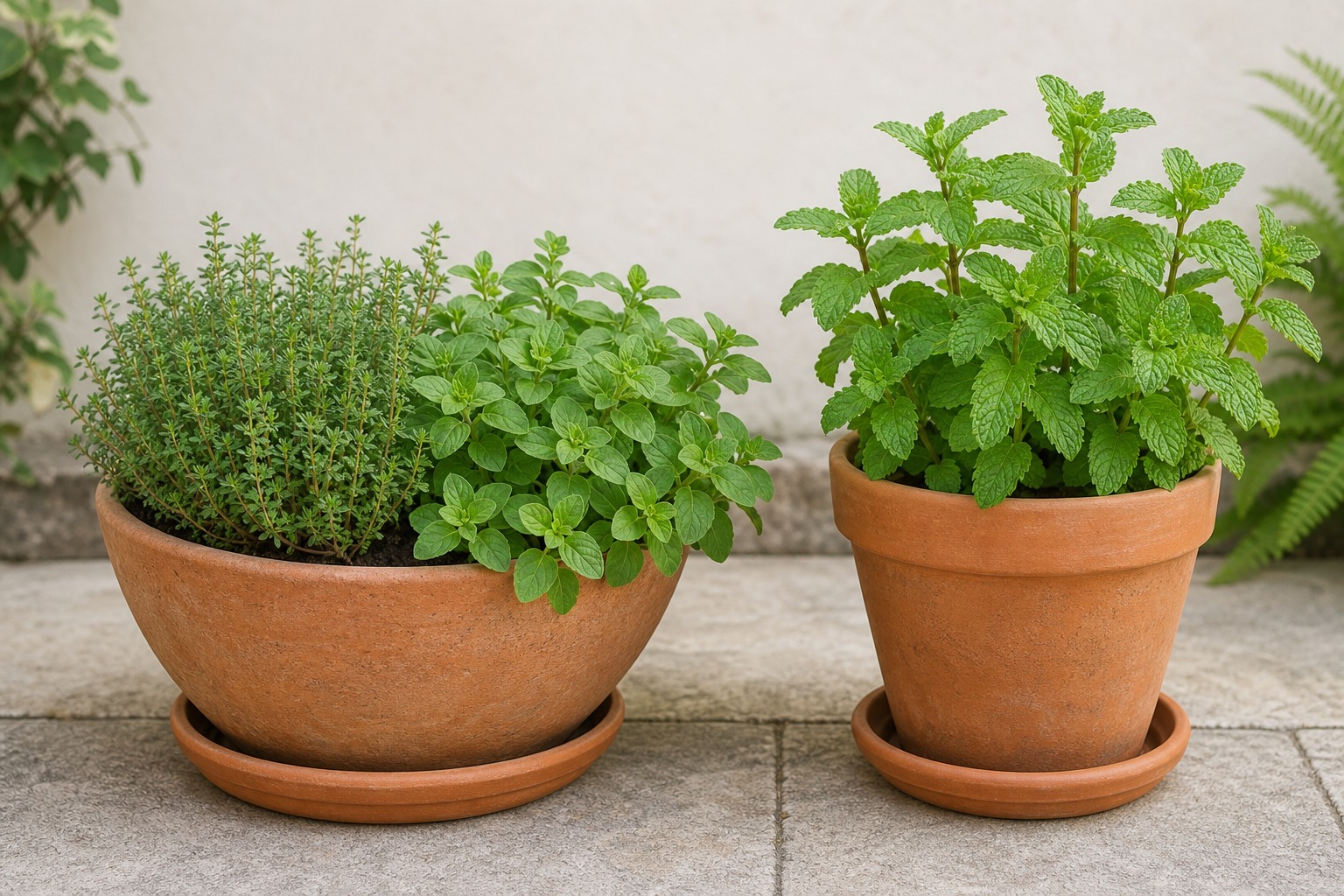
Mint deserves its own container. Penn State Extension recommends containing aggressive herbs such as mint because they can spread into neighboring areas. On a patio, a separate pot also makes mint easier to prune and prevents it from competing with slower plants.
Even compatible herbs need enough room. Two young plants may look sparse on planting day but fill the container later. If you are unsure, one plant per pot is the easier beginner choice.
How Often Should You Water Herbs in Pots?
Water when the top layer of potting mix begins to feel dry, then water thoroughly until some drains from the bottom. Do not rely on a fixed weekly schedule because heat, wind, pot size, and container material change how quickly a pot dries.
The University of Minnesota Extension advises checking containers daily during warm weather and watering when the top inch feels dry. Containers lose moisture faster than garden beds, especially in summer.
Use the finger test:
- Push a finger about an inch into the potting mix.
- If it feels damp, check again later.
- If it feels dry at that depth, water slowly.
- Stop after water begins leaving the drainage hole.
- Empty any saucer that remains full of water.
Basil, mint, parsley, and cilantro prefer more consistent moisture. Thyme, oregano, rosemary, sage, and lavender should dry somewhat between waterings. This is why grouping by water need matters.
Wilting is not a reliable watering calendar. A plant can wilt from dry soil, damaged roots, or waterlogged soil. Check the mix before adding more water.
Should You Start Herbs From Seeds or Young Plants?
Young plants are the simpler route when you want a working patio garden quickly. Seeds cost less per plant and offer more variety, but they add a germination stage and require closer moisture monitoring.
Choose young plants when:
- This is your first container garden
- You want to harvest within the current season
- Your patio setup is still an experiment
- You only need one plant of each herb
Choose seeds when:
- You want several plants of the same herb
- A specific variety is unavailable locally
- You enjoy the seed-starting process
- You have time to keep the seed mix consistently moist
You can also use a mixed approach. Buy rosemary, lavender, or parsley as young plants and sow quick annual herbs such as basil or cilantro from seed.
If your goal is a collection of traditional medicinal herbs rather than kitchen herbs, a curated seed set can reduce the plant-selection step. It does not remove the need to match each plant to your climate, light, and watering routine. Our Medicinal Garden Kit review explains what one such kit includes, what its guide can and cannot solve, and why it should be treated as a gardening project rather than a medical treatment.
A Four-Pot Small Patio Layout
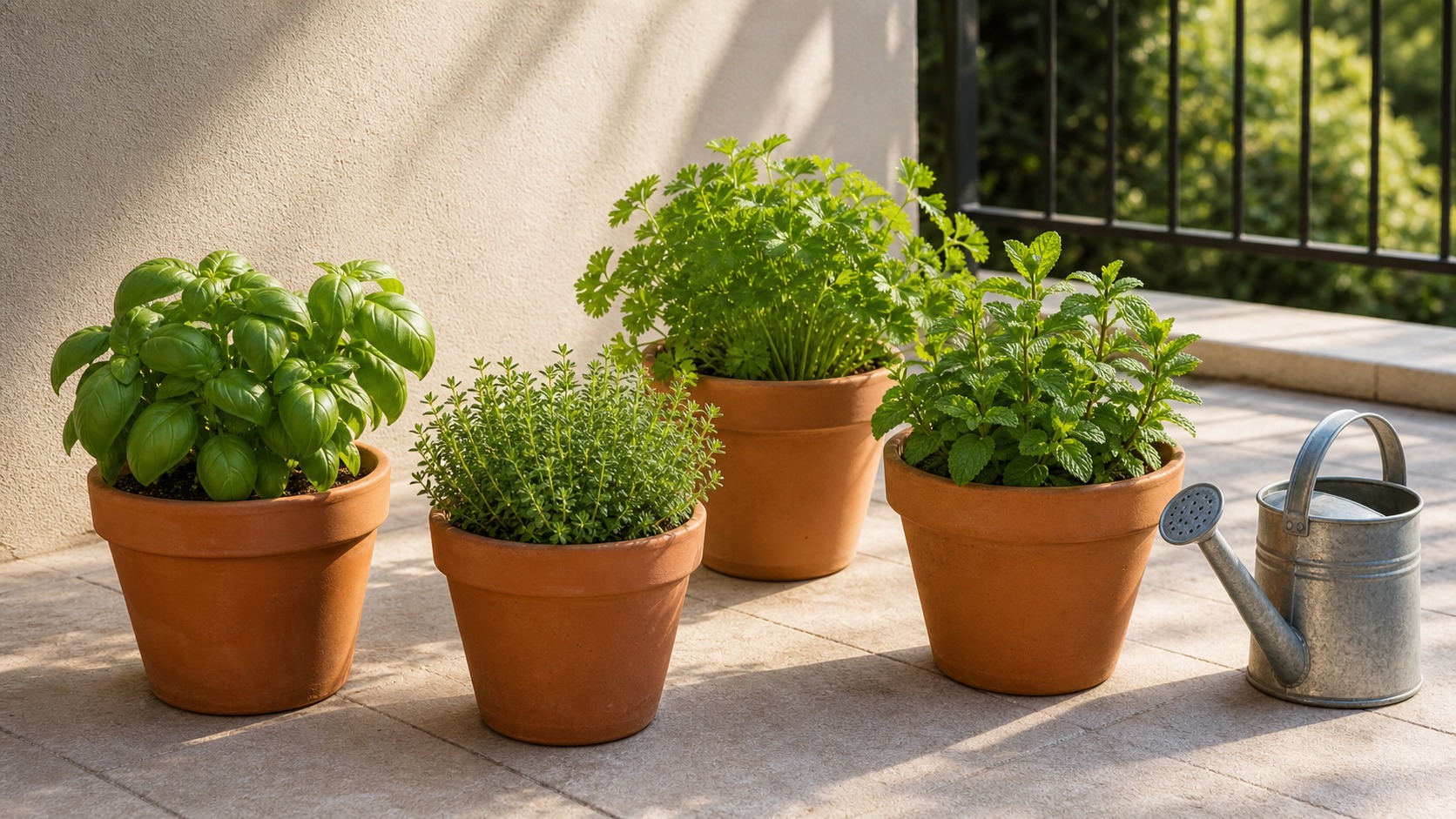
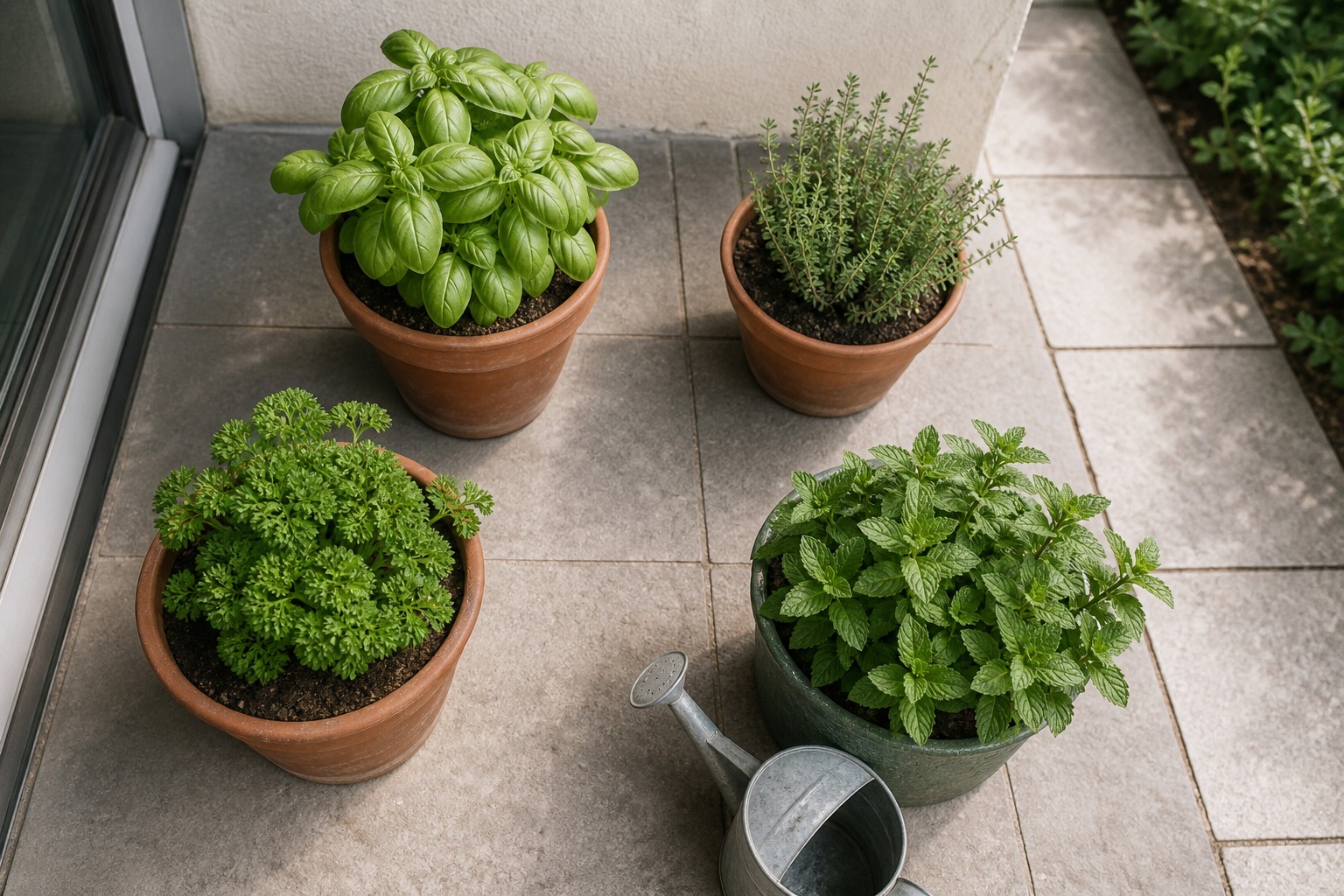
A four-pot layout gives each plant enough separation while keeping daily care simple. Place the driest group in the brightest part of the patio and the moisture-loving group where you will notice it easily.
| Patio position | Pot | Plant | Reason |
|---|---|---|---|
| Brightest, warmest edge | Pot 1 | Thyme | Likes sun and drier conditions |
| Bright area with easy access | Pot 2 | Basil | Needs regular checking and harvesting |
| Slightly gentler light | Pot 3 | Parsley | Prefers steadier moisture |
| Separate corner | Pot 4 | Mint | Keeps spreading growth contained |
Leave walking space around the pots and avoid blocking a door, drain, or emergency exit. If the patio is elevated, confirm that shelves and rail-mounted planters are secure before loading them with wet soil.
Take a photo of the setup on planting day. Compare it after two weeks. If one plant leans toward the light, becomes pale, or dries much faster than the others, move that pot rather than rebuilding the whole garden.
Common Container Herb Garden Mistakes
Most early problems come from the setup, not a lack of gardening talent. Correct the growing conditions before buying another product.
Using a pot without drainage. Decorative cachepots can trap water around the roots. Keep the herb in a draining inner pot or drill an appropriate hole if the material allows it.
Planting everything together. A mixed herb bowl looks attractive on day one but becomes difficult when rosemary needs drier soil than basil.
Starting with too many herbs. A dozen pots create a dozen moisture checks. Learn four plants first, then add one at a time.
Watering by calendar. Tuesday is not automatically watering day. Check the soil because weather changes the schedule.
Leaving mint uncontained. Mint can crowd a shared pot and spread through nearby beds if it reaches open soil.
Keeping herbs in nursery pots all season. Small pots dry quickly and can restrict roots. Move the plant into a container suited to its mature size.
Assuming every herb is safe to consume for every person. Growing a plant successfully does not establish that it is appropriate for a health condition. The National Center for Complementary and Integrative Health warns that herbal products can interact with prescription and over-the-counter medicines, and that interaction information is incomplete for many herbs.
Frequently Asked Questions
Can herbs grow in pots on a shaded patio?
Some herbs tolerate less light, but most common culinary herbs grow more strongly with several hours of direct sun. Measure the actual light first, then consider parsley, chives, cilantro, or mint for the gentler area instead of forcing rosemary or thyme into deep shade.
Do herb pots need drainage holes?
Yes. Drainage holes let excess water leave the container and help keep roots from sitting in waterlogged mix. A layer of stones does not replace an open drainage path.
Can basil and mint grow in the same pot?
They have similar moisture preferences, but mint spreads aggressively and can crowd basil. Separate pots make both plants easier to manage.
How many herbs should a beginner start with?
Three or four herbs are enough for a useful first patio garden. That number lets you learn different moisture and light needs without turning daily checks into a large chore.
Can you grow medicinal herbs in pots?
Many plants traditionally described as medicinal can grow in containers, but container success depends on the individual species. Growing an herb is not evidence that it treats a condition or that consuming it is safe for you.
How do you keep potted herbs alive while traveling?
Move the pots away from the hottest afternoon exposure, water them thoroughly before leaving, and ask someone to check the soil if you will be gone for several hot days. Test any self-watering method before the trip rather than setting it up on departure day.
Start with four pots, watch them for two weeks, and let the patio tell you what to change. Once you can predict which container dries first and which area gets the strongest light, adding the next herb becomes much easier.
Leave a Reply