Table of Contents
Ultimate Small Shop Review: Is the $1,000 Budget Realistic?
This article contains affiliate links. If you buy through them, we may earn a commission at no extra cost to you. Last updated: July 30, 2026 A small woodworking shop can turn every project into a logistics exercise. You roll out the table saw, move the assembly table, search for the clamps, then discover that the board still cannot pass the wall. The work may be enjoyable; rearranging the room before every cut is not. Ultimate Small Shop is sold as a shortcut through those decisions. Its pitch combines shop layouts, tool buying, utilities, dust control, and safety in one 246-page guide. The organization is appealing, but the sales page also makes aggressive claims about building a shop for under $1,000 and finding tools at steep discounts. This Ultimate Small Shop review separates the useful planning framework from numbers that remain vendor claims.Key Takeaways
- Ultimate Small Shop is a six-module digital guide for planning, equipping, and organizing a compact woodworking shop.
- The guide may be useful as a structured checklist, especially for a beginner who feels overwhelmed by layout and tool choices.
- The advertised under-$1,000 shop and 40–70% tool savings are not independently verified outcomes and will vary widely.
- The public sales page showed $29 when checked, while the affiliate page listed a $39 front end and three additional offers. Verify the checkout total.
- Do not use generic ebook advice as a substitute for local electrical requirements, source-capture dust control, or professional help.
Why Is a Small Woodworking Shop So Frustrating?
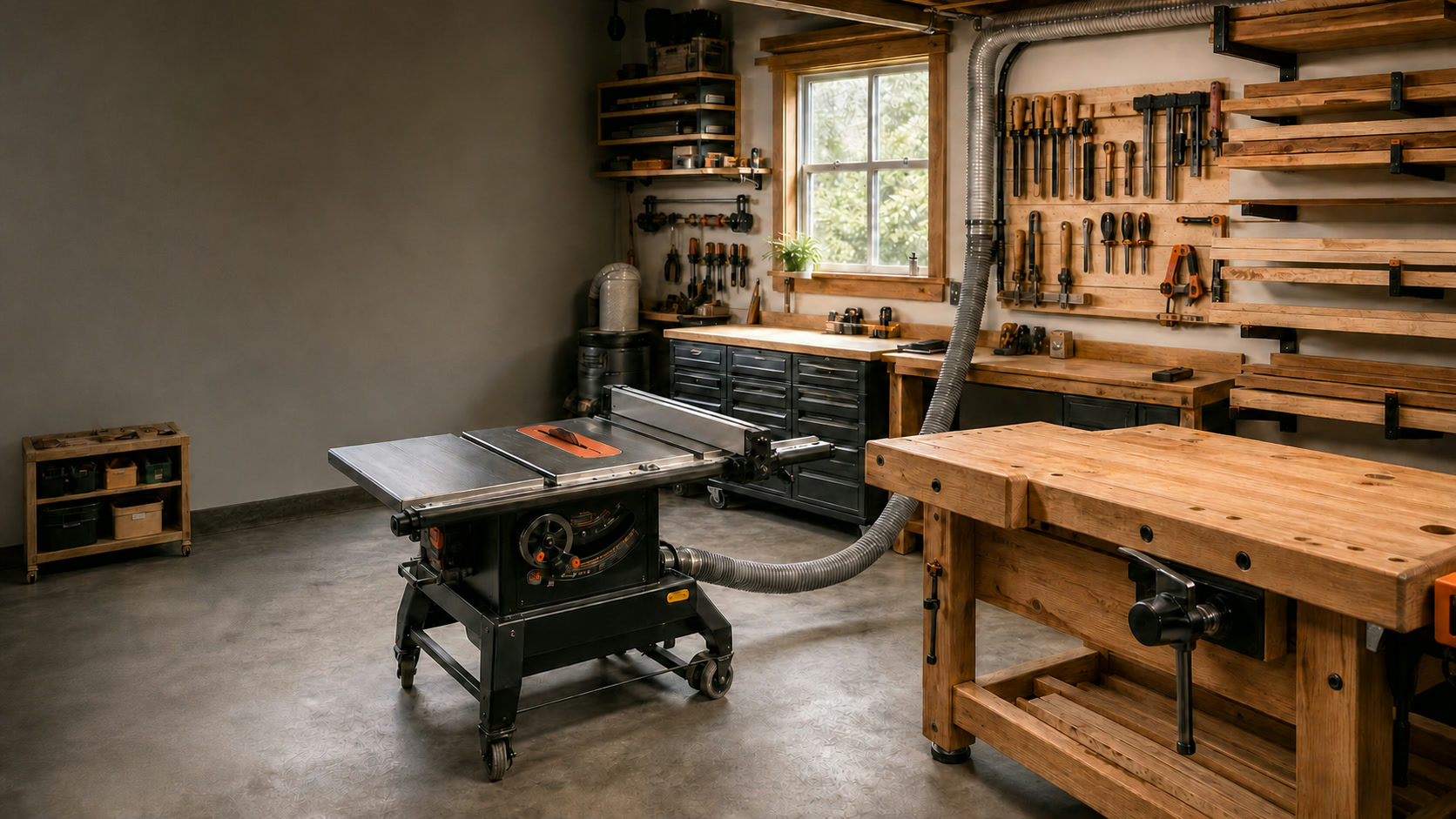
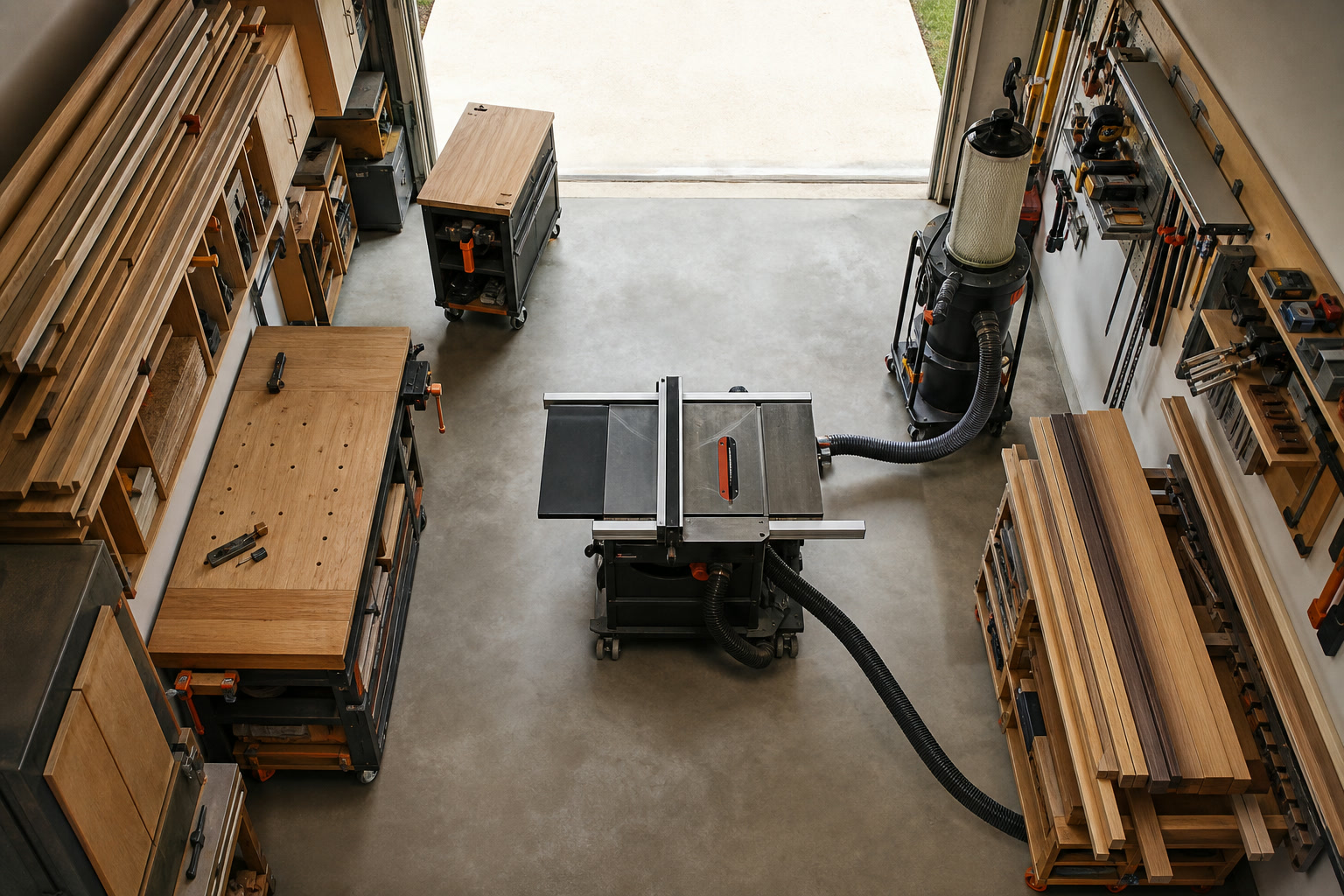
A small shop is frustrating because every machine competes for both storage space and temporary working clearance. A floor plan that appears adequate can fail when a long board needs several extra feet before and after a saw. Woodworkers describe the same constraint in different ways. One Reddit poster said the constant moving caused them to struggle with wanting to work because of “the space constraints”. On Fine Woodworking’s forum, a shop owner wrote, “I cant keep all my tools as the space is just too small.” Portability helps, but it creates another ritual. A Garage Journal member explained that most equipment had to be set up only when needed, calling that “not ideal” but necessary in a small shop. An American Association of Woodturners forum member put the organizational problem plainly: “The space is too small for randomly located items.” Even storage furniture can become part of the problem. During a shop-layout discussion on Sawmill Creek, one participant observed that “too much space is wasted on things that don’t hold tools.” These are real planning problems. They support the need for a deliberate layout, not the conclusion that one paid guide will solve every room, budget, or workflow.What Is Ultimate Small Shop?
Ultimate Small Shop is a downloadable woodworking-shop planning guide attributed to Ralph Chapman. The vendor presents it as a 246-page illustrated ebook organized into six modules:- tool selection;
- space selection;
- shop layouts;
- electricity, lighting, and sound reduction;
- heating, cooling, ventilation, and dust;
- safety and additional setup topics.
Official offer
Want to inspect the Ultimate Small Shop guide?
Review the current modules, format, price, and terms before deciding whether the planning structure fits your shop.
Affiliate link · Price, availability, and terms may change.
What Do You Get for the Price?
You get one core digital guide, followed by optional offers in the sales funnel. The public pages do not currently agree on the front-end price, so the checkout screen is the only reliable total for a purchase made today. When checked for this review, the sales page displayed $29 and a 60-day refund period. The vendor’s affiliate information page listed a $39 front-end product, then described these additional offers:| Offer | Advertised price | What to verify |
|---|---|---|
| Ultimate Small Shop | $29 on sales page; $39 on affiliate page | Current checkout price and format |
| DIY Home Made Machines & Tools | $67, with a $47 lower-priced offer | Whether it duplicates projects you can source freely |
| DIY Workshop Videos | $47 | Video topics and access period |
| Essential Woodworking Class | $37 | Curriculum, instructor details, and refund coverage |

Official offer
Check the current package before paying
Confirm the front-end price, optional additions, delivery format, and refund terms shown at checkout.
Affiliate link · Price, availability, and terms may change.
Is a Woodworking Shop Under $1,000 Realistic?
It can be realistic only under narrow assumptions: a suitable space already exists, much of the equipment is bought used, and the first shop is limited to a small set of projects. It is not a dependable all-in budget for every reader. The phrase “complete shop” needs a definition. A basic hand-tool and benchtop setup for boxes or small furniture is different from a shop expected to mill rough lumber, collect fine dust, resaw thick boards, and run several high-load machines. Local used-tool supply also changes the result. Costs commonly omitted from headline budgets include:- electrical inspection, new circuits, outlets, or lighting;
- dust collection, hoses, fittings, filters, and replacement bags;
- blades, bits, sharpening, clamps, and measuring tools;
- mobile bases, lumber storage, and work surfaces;
- hearing, eye, and respiratory protection;
- delivery, sales tax, repairs, and missing parts on used machines.
Can the Tool-Discount Claims Be Trusted?
The claimed 40–70% savings should be treated as a possibility, not an expected result. Used equipment, clearance stock, and patient comparison shopping can reduce costs, but the percentage depends on location, condition, timing, and the original price used for comparison. Any list of “secret sources” also ages. Store policies change, marketplace listings disappear, and a good used price in one region may be rare in another. A source directory is valuable only if its links and advice remain current. Before buying a used stationary tool:- confirm the model number and check whether parts remain available;
- inspect guards, fences, cords, switches, bearings, and alignment;
- price missing accessories before comparing it with a new unit;
- ask to see the machine run only when it can be tested safely;
- walk away from improvised wiring or removed safety equipment.
Where Does the Guide Need Stronger Safety Boundaries?
The guide needs stronger boundaries wherever sales copy reduces electrical or dust-control decisions to cheap shortcuts. A woodworking shop combines ignition sources, high-current machines, sharp cutters, and fine combustible dust; room layout alone does not control those hazards. The vendor suggests an inexpensive circuit approach that can run demanding tools without nuisance trips. Do not interpret that as permission to change breaker capacity, defeat protection, or improvise wiring. OSHA’s woodworking electrical guidance emphasizes grounded machinery, labeled and properly rated breakers or fuses, covered outlets, and repair of damaged cords. Workplace guidance is not a substitute for local residential code, but it shows why electrical capacity should be assessed by a qualified electrician. The sales page also promotes a very inexpensive clean-air technique. Air movement is not the same as capturing hazardous dust. OSHA’s fire and explosion guidance calls for dust collection at the source, effective exhaust ventilation, housekeeping, and avoiding practices that suspend accumulated dust into the air. Source capture can make a substantial difference. In a controlled test, a NIOSH table-saw hood design reduced wood-dust emissions by more than 90%. That result applies to the tested control design, not to every collector or home shop, but it illustrates why a fan or general room filter should not be treated as a replacement for collection at the cutting point.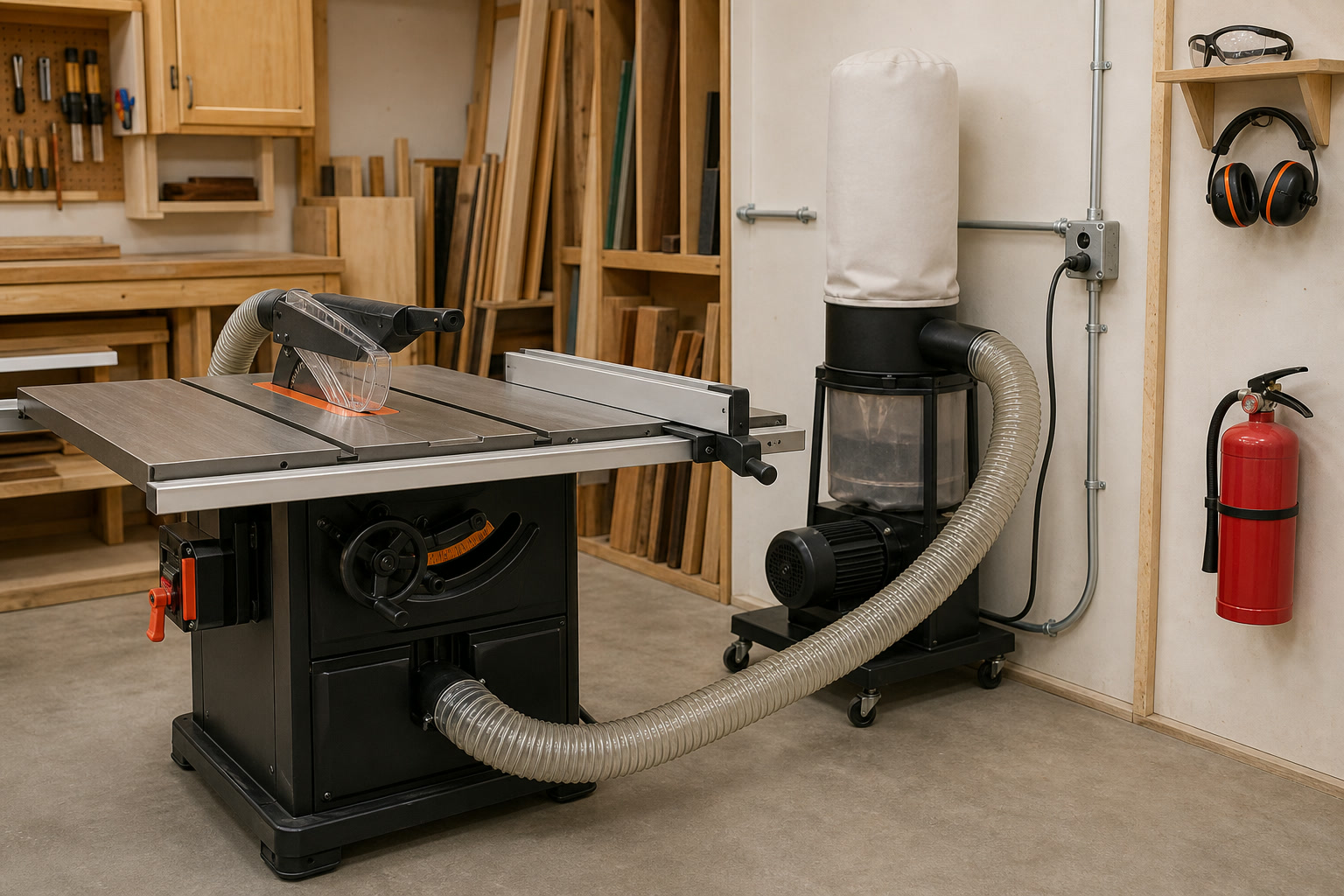
Ultimate Small Shop Pros and Cons
The strongest benefit is organization. The biggest weakness is that the headline savings and creator authority are difficult to verify independently.| Pros | Cons |
|---|---|
| Six-module structure covers the main planning categories | Under-$1,000 outcome is a vendor claim, not an audited average |
| Compact-layout focus matches a common hobbyist problem | 40–70% tool savings will vary and source lists can age |
| One guide may reduce the stress of assembling advice from many pages | Public pages conflict on the front-end price |
| Refund period is displayed on the official sales page | Three advertised upsells increase funnel complexity |
| Can serve as a checklist before equipment purchases | Generic electrical and air-quality shortcuts need professional safety context |
Who Is Ultimate Small Shop For?
Ultimate Small Shop may fit a beginner who has a defined room, wants a broad planning sequence, and prefers one illustrated resource over assembling a checklist from multiple sites. It is most plausible for a hobbyist starting with portable or benchtop tools and a limited project range. It is a weaker fit if you already run a functioning shop, need engineering-level dust calculations, require code-specific electrical design, or expect a turnkey shopping list that holds to a universal price. It also may disappoint someone whose main goal is project blueprints rather than shop planning. For that different need, our My Shed Plans review examines a large plan library rather than a workshop-layout guide.What Is the Verdict on Ultimate Small Shop?
Ultimate Small Shop looks more useful as a structured planning checklist than as proof that a full woodworking shop can be built for a fixed headline budget. The six-module scope is relevant, but the unverified savings, uncertain creator credentials, price conflict, and safety framing prevent a stronger recommendation. If your main problem is decision overload, the guide may save research time. If your main problem is money, first price a minimum viable shop locally, including wiring, dust control, protective equipment, and consumables. The difference between that total and the current checkout price is the comparison that matters. This article contains affiliate links. If you buy through them, we may earn a commission at no extra cost to you.Official offer
Ready to review the offer for yourself?
Use the official offer page to verify the latest price, included modules, optional additions, and refund terms.
Affiliate link · Price, availability, and terms may change.
Leave a Reply