Table of Contents
Does Neuro-Balance Therapy Work for Fall Prevention?
Disclosure: This article contains affiliate links. If you purchase through my link, I may earn a commission at no extra cost to you.
You hear the phone ring at an odd hour and your stomach drops before you even answer. Maybe it’s your mom’s care home. Maybe it’s your own knees buckling on the stairs last week. Either way, falling has stopped being a distant worry. It has become something you plan around, worry about, and lose sleep over.
When Fear of Falling Starts Changing How You Live
The fear does not stay quiet. It changes routines, phone habits, and sleep.
One caregiver described it plainly in a thread about a parent in memory care: “I began to jump out of my skin every time my phone rang because it was always bad news about yet another fall,” according to a discussion on AgingCare. That thread involved a parent with dementia, so the falls there were tied to cognitive decline, not just physical balance.
Another caregiver in the same thread wrote about a different kind of frustration: “My mother refuses to use her walker even though she fell a year ago and needed surgery.” Getting a parent to accept help, even simple help like a walker, is its own battle.
On a separate forum, a caregiver summed up the search for answers this way: “Sometimes it feels like you are trying to find a needle in a hay stack,” in a thread about a mother’s balance problems. Falls rarely have one clean cause, which makes them hard to fix with one simple trick.
And the worst part is that the fear often grows faster than the actual physical risk does.
Why Balance Declines With Age — and Why Avoidance Makes It Worse
Balance problems are common as we age. Inner ear changes, weaker leg muscles, slower reflexes, and vision changes all play a role.
On a Mumsnet thread about elderly parents and falls, one caregiver described watching her father-in-law’s falls simply as “It’s grim and scary.” A different caregiver in the same thread shared her own version of the burden: she and her sister “were regularly called out at 3am when she fell in the night,” caring for their mother. That kind of routine wears families down.
Here is the tricky part. Cleveland Clinic explains that fear of falling often leads people to move less. Moving less weakens muscles further. Weaker muscles raise the actual risk of falling. The cycle feeds itself.
Many families have already tried walkers, grab bars, and reminder calls. Those things help, but most do not address weak muscles or poor balance reflexes underneath.
Here is what many people get wrong. They assume caution alone, meaning less movement, is the safest response to a fall. Cleveland Clinic’s guidance lists supervised strength and balance exercise as a standard part of managing fall risk, not just caution. Sitting still to avoid a fall can end up making the next fall more likely.

What Neuro-Balance Therapy Claims to Do
Neuro-Balance Therapy is a digital program built around short daily foot and lower-leg exercises. According to the program’s official sales page, it was created by Chris Wilson, who is described there as a Certified Balance Specialist connected to Critical Bench.
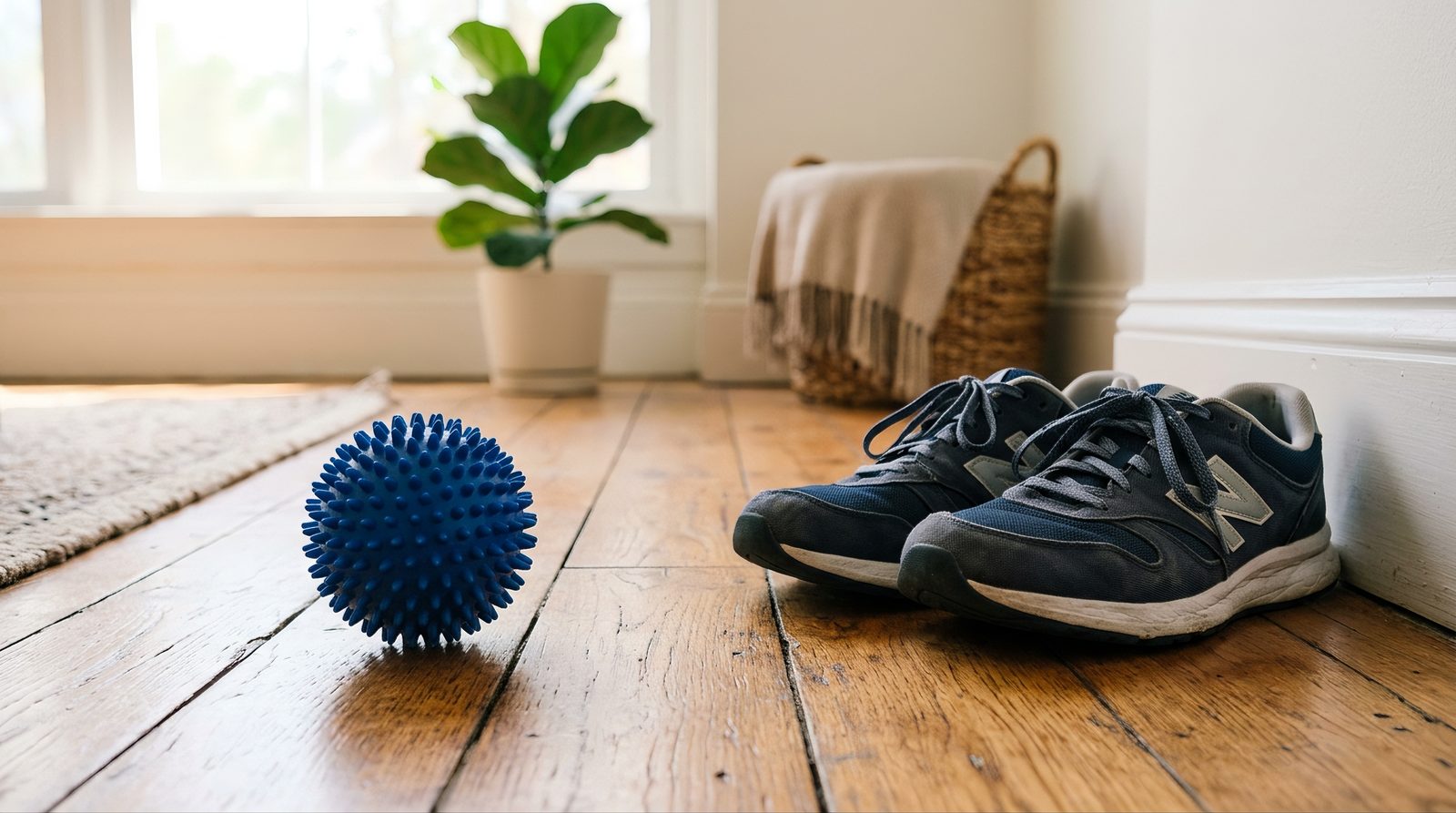
The vendor’s page describes a routine involving a small spike ball tool and instructional videos, centered on a daily foot movement the site calls a “ritual.” The vendor states this routine is meant to stimulate the deep peroneal nerve in the lower leg. That mechanism claim comes from the product’s marketing. It has not been independently verified by outside research, so it should be read as a vendor claim, not an established medical fact.
If you want to see exactly what the program includes before going further, the details are on the official page below.
Official offer
Want to see what Neuro-Balance Therapy includes?
See the full program details, current pricing, and vendor terms before deciding.
Affiliate link · Price, availability, and terms may change.
Does the Evidence Actually Support This Approach?
This is where honesty matters most. There is no published clinical trial testing Neuro-Balance Therapy itself.
What does exist is broader research on balance exercise programs in general. A study published on PMC followed adults through an eight-week multicomponent balance exercise program. Fear-of-falling scores dropped from 4.9 to 3.7, a change the researchers reported as statistically significant (p=0.036).
That result sounds encouraging, but it comes with real limits. The study had no control group, so we cannot rule out other factors causing the improvement. Dropout was also high, with 35 of 73 participants not completing the program.
This evidence supports balance exercise as a category, not this specific product. No independent researcher has tested the spike ball tool, the deep peroneal nerve claim, or this exact ten-second routine. That is a genuine gap, and it matters if you are deciding whether to spend money on this particular program.
Falls That Need a Doctor First
Some falls are signals of something more serious. Please talk to a doctor before starting any new exercise routine if any of these apply. This is general information, not personal medical advice.
See a doctor first if falls come with dizziness or vertigo, a recent stroke or TIA, a recent change in medications, worsening memory or confusion, or sudden weakness in one leg. A caregiver in one thread described searching for the cause behind repeated falls as feeling like finding a needle in a haystack, and that search often needs a medical workup, not just exercise.
Some sales pages for balance programs suggest no doctor visit is needed before starting. That claim is not safe advice for someone with an unexplained fall history. A doctor can rule out medication side effects, inner ear disorders, or neurological causes that exercise alone cannot fix.
If you do start any new balance exercise, do it near a sturdy chair or countertop, ideally with someone nearby the first few times. Stop immediately if you feel dizzy or sharp pain.

Neuro-Balance Therapy Price and Refund Policy
According to the official sales page, the digital version of Neuro-Balance Therapy is listed at $37. A physical version that includes the spike ball tool is listed at $47.
The vendor states a 60-day refund window applies. Prices and terms can change, so it is worth confirming the current numbers directly on the official page before buying.
Official offer
Considering Neuro-Balance Therapy?
Check the current price and 60-day refund terms on the official site.
Affiliate link · Price, availability, and terms may change.
Who This Program Is For (and Who Should See a Doctor Instead)
Because Neuro-Balance Therapy has no independent clinical testing of its own, we cannot say who it definitely works for. What we can do is point out where medical care needs to come first.
See a doctor before starting any balance program if you have had a recent fall with an unexplained cause, dizziness, a recent stroke or TIA, cognitive decline, or sudden leg weakness. Those situations need a diagnosis before any exercise plan.
If a doctor has already cleared you for general exercise and you are simply comparing structured home routines, you can review what this program includes alongside other approaches, such as the balance exercises described by Cleveland Clinic.
My Verdict on Neuro-Balance Therapy
Here is where things land. Fear of falling is real, and it feeds on itself the way Cleveland Clinic describes. Structured balance exercise as a category is supported by general research, including the PMC study discussed above.
But that research was not done on this product. Neuro-Balance Therapy has never been tested in a published clinical trial of its own. The deep peroneal nerve mechanism described on the sales page is a vendor claim, not a verified medical finding.
There is not enough independent, product-specific evidence to recommend Neuro-Balance Therapy. The real limitation here is simple. We do not know if this specific ten-second routine changes fall risk any more than standard supervised balance exercises would. Anyone with an unexplained fall history should see a doctor before trying any new exercise product.
Disclosure: This article contains affiliate links. If you purchase through my link, I may earn a commission at no extra cost to you.
Official offer
Ready to take a closer look?
Review the complete program and verify the latest price before deciding.
Affiliate link · Price, availability, and terms may change.

Frequently Asked Questions
Is Neuro-Balance Therapy backed by clinical research? No published clinical trial has tested this specific program. Broader research on balance exercise programs exists, such as the PMC study cited above, but it does not test this product directly.
Can Neuro-Balance Therapy replace physical therapy? No. If a doctor or physical therapist has recommended specific exercises, those recommendations should come first. This program is a home routine, not a medical treatment.
Is the spike ball tool required? According to the official sales page, the physical version with the spike ball costs more than the digital-only version. The vendor does not require either format.
What if falls keep happening even with exercise? Repeated falls, especially with dizziness, confusion, or sudden weakness, need a doctor’s evaluation. Exercise alone cannot rule out or treat underlying medical causes.
Is there a refund if the program does not help? The vendor states a 60-day refund window on the official sales page. Confirm current terms directly before purchasing.
Leave a Reply