Table of Contents
How to Stop Destructive Chewing in Dogs
This article is for general information only and is not a substitute for veterinary or professional behavior advice. If your dog’s chewing is sudden, severe, or paired with other worrying signs, talk to your veterinarian.
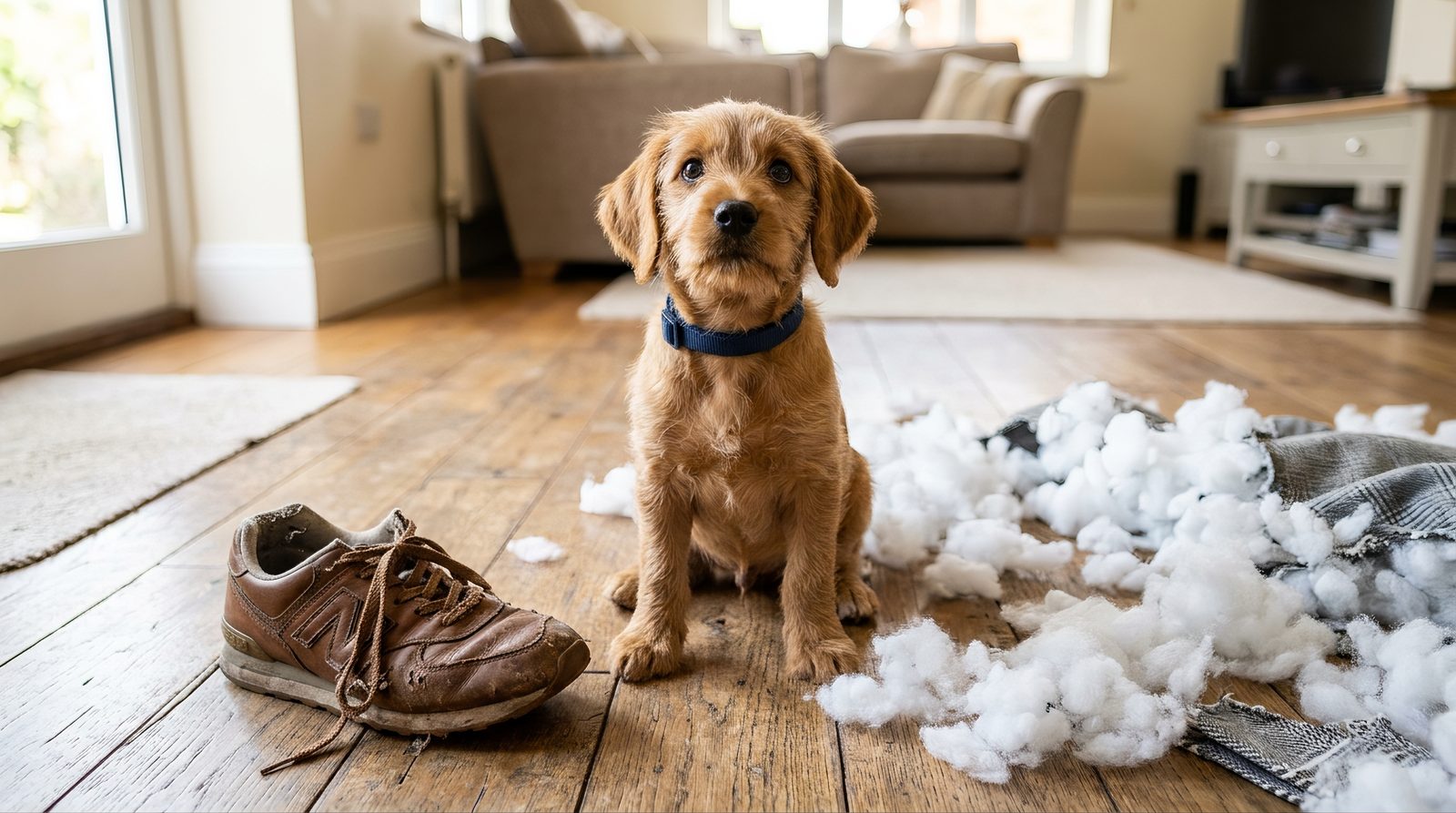
You come home to a shredded couch cushion. Or a chewed-up shoe. Or a table leg that now looks like a beaver got to it. If you are searching for how to stop destructive chewing in dogs, you are probably tired, a little embarrassed, and not sure if your dog is just being bad or trying to tell you something.
The good news is that destructive chewing almost always has a reason behind it. Once you know the reason, the fix gets a lot more clear.
First, Work Out Why Your Dog Is Chewing
Chewing is normal dog behavior. Destructive chewing usually means something in your dog’s routine or environment needs attention. Here are six common causes.
Teething. Puppies chew hard when their adult teeth are coming in, usually until around six months old. This phase is uncomfortable for them and it passes on its own with the right outlets.
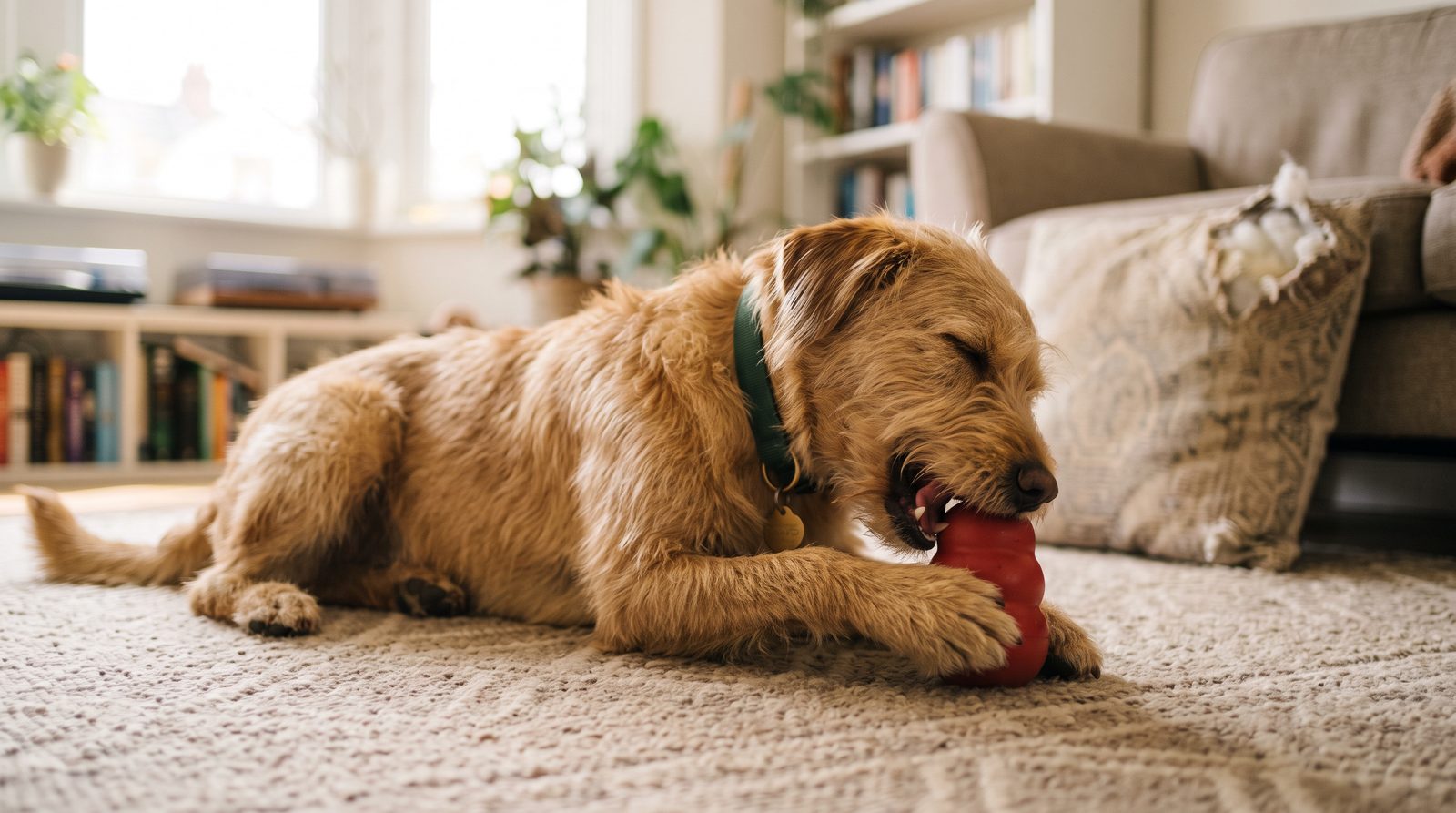
Boredom or lack of stimulation. A dog left alone with nothing to do will often find something to do. That something is frequently your belongings.
Separation anxiety. Some dogs only chew when left alone, and the damage is often concentrated near doors, windows, or exits.
Stress or frustration. Loud noises, changes in the household, or a new pet can leave a dog with pent-up energy that comes out as chewing.
Hunger. Dogs on a restricted or calorie-controlled diet sometimes chew more, possibly out of hunger.
Fabric sucking. Some dogs develop a habit of sucking or chewing on fabric, which can be linked to being weaned too early, before 7 to 8 weeks old.
According to the ASPCA, these causes overlap often, so it helps to watch when and where the chewing happens before you decide on a fix.
Step 1: Dog-Proof the Space First
Before you train anything, manage the environment. This is the fastest way to see fewer chewed items right away.
Walk through each room your dog has access to. Pick up shoes, cords, remote controls, and anything else within reach. Move trash cans behind closed doors.
When you cannot supervise, confine your dog to a safe area, like a crate or a gated room, with appropriate chew toys inside. According to ASPCA guidance, dogs should not be confined this way for more than 6 hours at a stretch.
This step is not a punishment. It is closing the gap between “wants to chew” and “has access to something valuable to chew.”
Step 2: Give Better Things to Chew
Your dog needs something to chew. The goal is to make sure it is something you approve of.
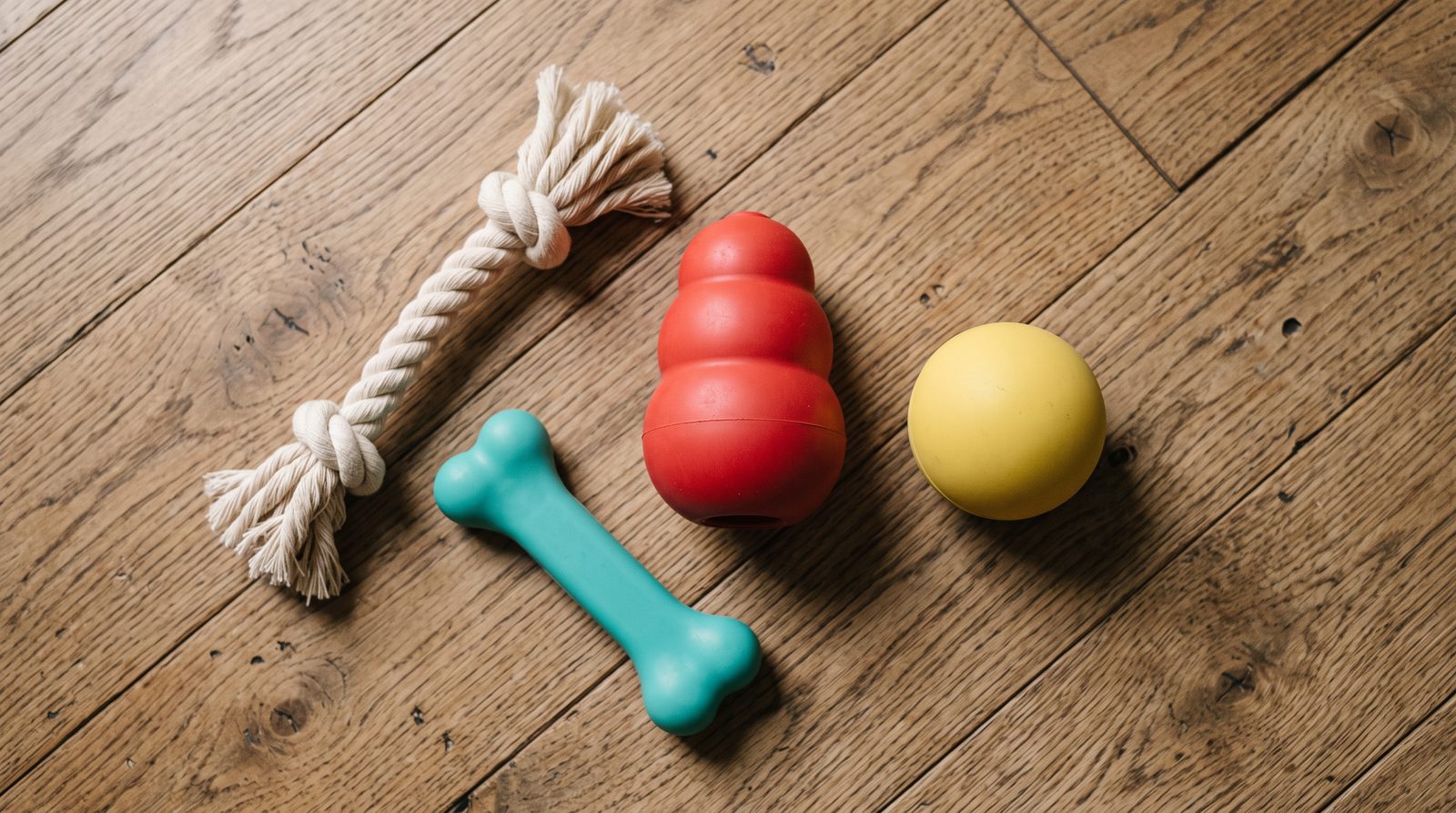
Offer a variety of chew types: rubber chew toys, edible chews, and rope toys. Rotate them every 2 to 3 days so they stay interesting instead of becoming background noise.
Puzzle toys stuffed with food work especially well during the hours your dog tends to chew the most, like right after you leave for work.
A few general safety notes worth keeping in mind: pick a chew size appropriate for your dog, stay nearby while your dog is working on a chew, and remove any piece that breaks off small enough to swallow.
Step 3: Supervise and Redirect, Never Punish
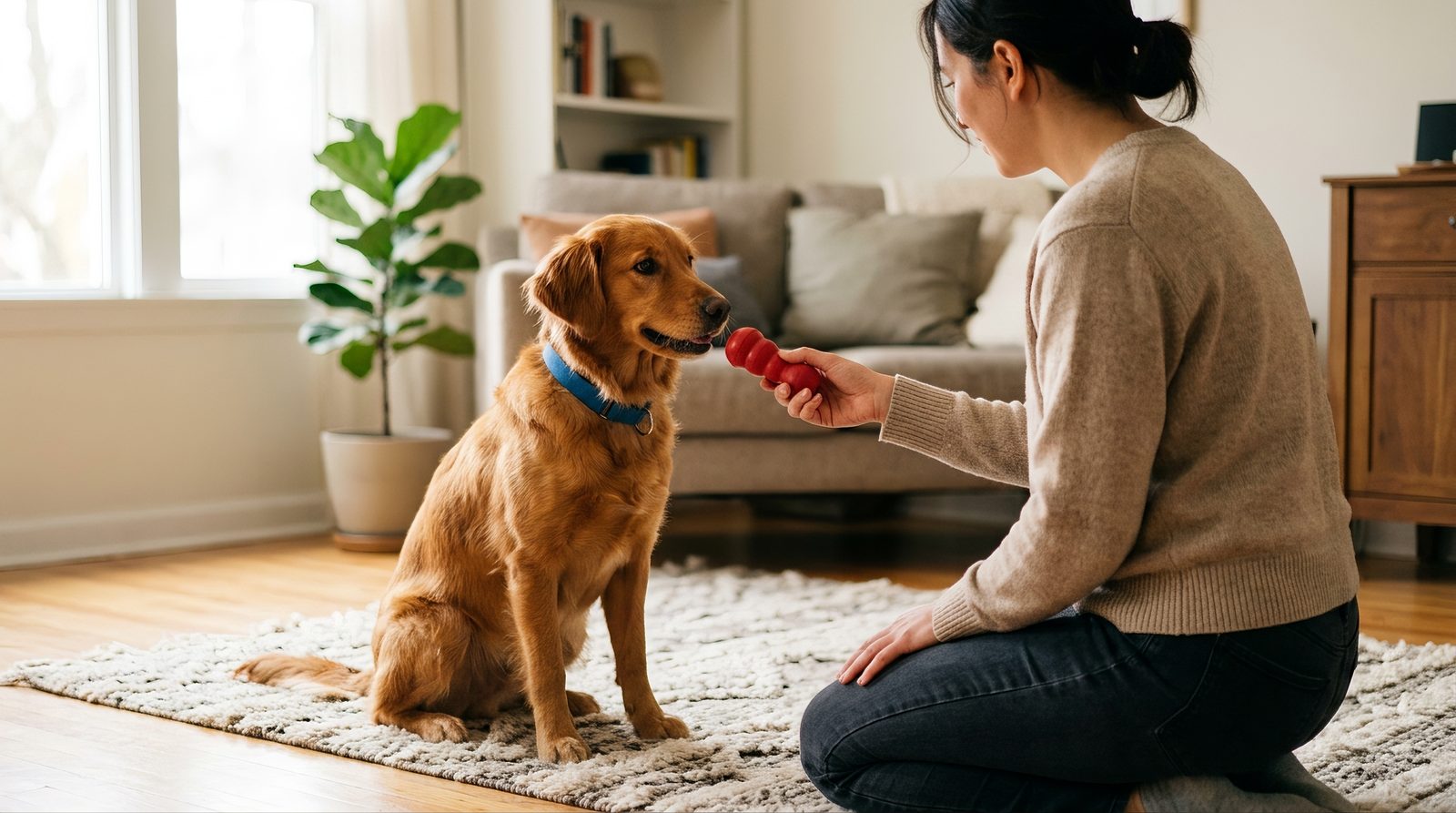
If you catch your dog chewing something they should not, calmly redirect them to an appropriate chew toy. Praise them once they take it.
What does not work is punishing your dog after the fact, for example scolding them when you get home and find the damage already done. Dogs cannot connect a punishment to something that happened hours earlier.
The American Veterinary Society of Animal Behavior (AVSAB) recommends reward-based training methods over punishment for addressing unwanted behavior in dogs. Rewarding the right choice, in the moment, teaches your dog what to do instead of just what not to do.
Step 4: Fill the Exercise and Enrichment Gap
A lot of destructive chewing traces back to a dog with energy and no outlet. This step is where boredom-driven chewing tends to improve the most.
Daily walks matter, but mental work matters too. Short training sessions, scent games, and food puzzles tire a dog out in a different way than a walk does.
If your dog chews mostly during the hours you are away or busy, try adding a short enrichment session right before that window starts. It will not eliminate every urge to chew, but it often takes the edge off.
What Chew Deterrent Sprays Can and Can’t Do
Bitter-tasting deterrent sprays can help steer a dog away from a specific item, like a table leg or a baseboard.
They are not a stand-alone fix. According to ASPCA guidance, these sprays typically need to be reapplied daily for 2 to 4 weeks to work, and they work best alongside offering your dog appropriate chew items, not in place of them.
If you are only spraying furniture and not giving your dog anything else to chew, do not expect the spray alone to solve the problem.
When It’s Not Boredom: Signs You Need Help
Some chewing patterns point to something beyond a management or enrichment gap.
If the chewing is much worse when your dog is left alone, and comes with pacing, whining, barking, or house-soiling near the time you leave, this can point to separation anxiety. That is a case for your veterinarian or a veterinary behaviorist, not just a new chew toy.
Fabric sucking that has become a repetitive, hard-to-interrupt habit is also worth a professional opinion, especially in breeds known for this pattern.
If your dog is on a restricted diet and the chewing looks tied to hunger, talk to your veterinarian before changing feeding amounts on your own.
When a Structured Program Might Help
Some owners prefer a step-by-step system over piecing together a routine on their own. If you would rather follow a structured program instead of assembling one yourself, we broke one down in our honest review of Brain Training for Dogs, which focuses on mental enrichment and reward-based games.
Mistakes That Make Chewing Worse
A few common reactions tend to backfire.
Do not punish after the fact. Your dog cannot connect a scolding to something they did hours ago.
Do not use tape or other devices to keep your dog’s mouth closed. This does not address the cause and can cause real distress.
Do not tie a chewed item to your dog as a “lesson.” This is an old myth that does not teach anything useful and can be frightening for your dog.
Do not confine your dog for more than 6 hours at a time. Long confinement can add stress, which can make chewing worse, not better.
Do not use a muzzle to prevent chewing at home. Muzzles have specific, supervised uses and are not a chewing solution.
Frequently Asked Questions
How long does puppy teething last? Most puppies finish teething and settle down on the harder chewing by around 6 months old, though the exact timeline varies by dog.
Will my dog grow out of it? Teething-related chewing often eases with age. Chewing caused by boredom, anxiety, or hunger usually needs a change in routine, not just time.
Do deterrent sprays work? They can help discourage chewing on a specific item, but according to ASPCA guidance they need daily reapplication for 2 to 4 weeks and work best combined with appropriate chew toys.
How much exercise is enough? This varies by breed, age, and health, but most dogs benefit from a mix of physical exercise and mental enrichment, not just a walk around the block.
Is crating okay? Short-term confinement in a safe space can be a helpful management tool, but ASPCA guidance suggests keeping it to no more than 6 hours at a time.
Leave a Reply